Why we build our own AI tools
Many of our projects involve content that standard tools cannot move or process, such as years of work spread across an old website, shared folders, or a custom database. For each of these projects, we develop our own AI-powered tools to read, sort and import the content in a way that meets the specific requirements of each project. Tools like these used to be too costly to build for a single website. However, with AI, they have become integral to our work.
We use Claude, Anthropic’s AI model, and we have been working with AI for over two years, including on the domain and hosting order system on our own website. The projects below demonstrate the benefits this has brought to our clients and ourselves.
How we used AI to migrate and rebuild dg-c.org
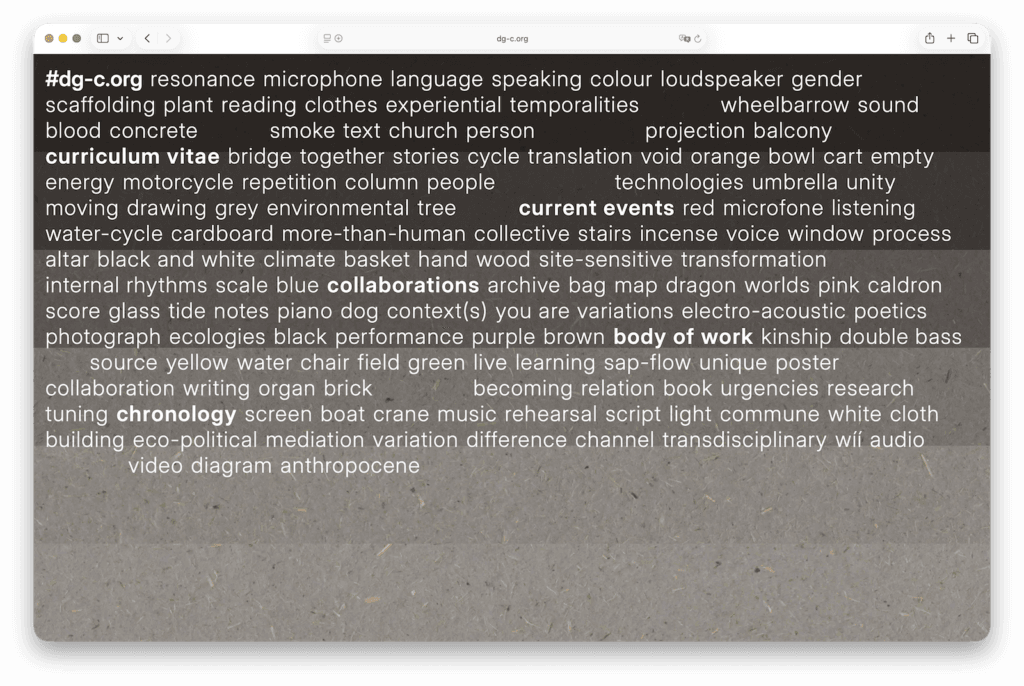
Client: Christina Della Giustina
Web design: gebr.silvestri
WordPress development: FourteenRockets
Christina Della Giustina’s website held more than twenty years of her artistic work. It was a hand-built static website with old-fashioned navigation, around fifty projects and variations, more than 600 images, PDFs, and over a hundred video and audio recordings. Nothing was arranged consistently. Pages linked to each other in loops, and files were spread across folders with no fixed system.
No ready-made migration tool could handle a website like this. We therefore developed our own AI tools in-house, built for this project, and worked with Claude, Anthropic’s AI model, as a development partner throughout. Every decision and every release stayed with us.
Mapping the old website
Our tools read every page of the old website, followed its links and listed each image, document and recording. This gave us and the client a complete overview before anything was moved, and it showed exactly how much work the migration would be.
Tagging the images
The new website is organised around tags, such as subjects and colours, so that visitors can browse the work by theme. We developed our own AI image agent, which looks at each photograph and adds plain, literal tags, following rules we agreed with the client in advance. Every tag the agent adds is marked, so the client can remove it with one click.
Moving the content
Our import tool shows what it will create for each project before anything is written to WordPress. The tool can be run again safely and never overwrites changes the client has made by hand. All projects have now been imported.
Building the new website
We developed the custom WordPress theme for gebr.silvestri’s design with AI assistance. Every change was reviewed and tested before release, and the code went through a full security and quality review before the website went live.
Christina now has a modern website that she can edit herself. We are now turning the image agent into a WordPress plugin, so that she can also tag new work with it.
How we used AI to migrate and develop rhinoresourcecenter.com
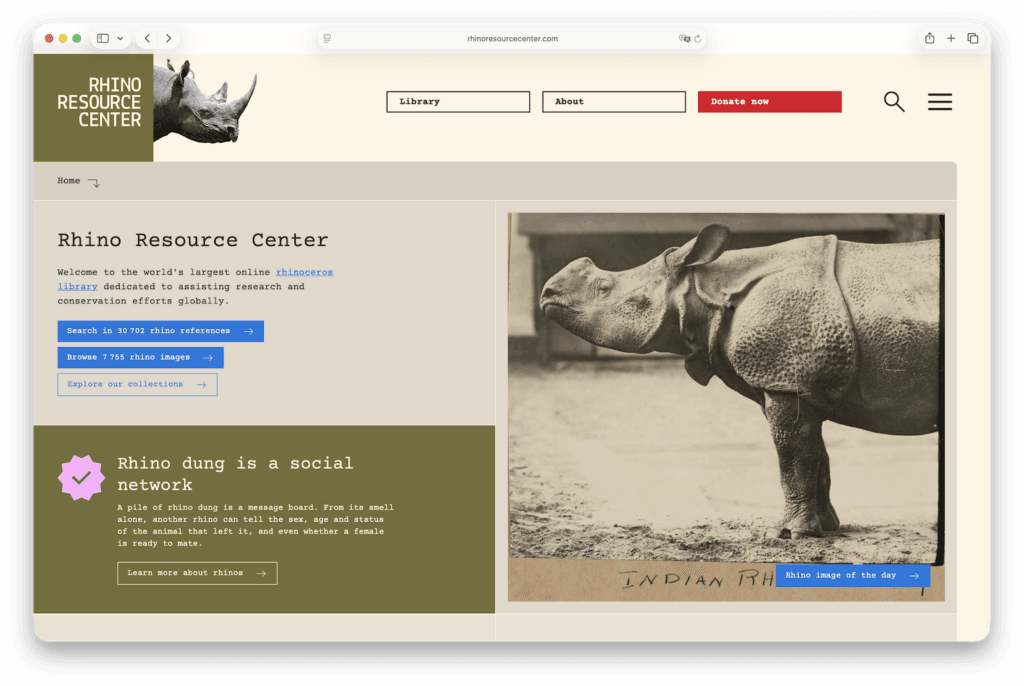
Client: Stichting Rhino Resource Center
Web design and WordPress development: FourteenRockets
The Rhino Resource Center is an online library of scientific literature and images about rhinoceroses, used by researchers and conservationists worldwide. Its collection of more than 30 000 references and 7 600 images had been built up over several decades in a custom database. Many records were linked to each other, such as book chapters to their book, and notes carried their own subjects, species and places.
No ready-made migration tool could move a collection like this without losing those links. We therefore developed our own AI tools in-house, built for this project, and worked with Claude, Anthropic’s AI model, as a development partner throughout. Every decision and every release stayed with us.
Moving the collection
We analysed the structure of the old database and built import tools that carried over every reference, image, author, note and tag, together with the links between them. Working with AI allowed us to build and refine these tools quickly, so the whole collection moved in one controlled process instead of record by record. Researchers found the library as they knew it.
Making search work
A library of 30 000 references is only as good as its search. We used AI to analyse how searches behave across the whole collection and improved them, so that results are precise and even the heaviest searches take about half a second.
Browsing by subject
Visitors can now list every reference for a country, species or subject without typing a search term. Our AI tools checked the subject tags across the collection against the original data, so that every reference appears where a researcher expects it.
Book chapters
Each book chapter now names its book and page numbers, as a researcher would cite it. Our tools updated all 1 100 chapter citations in one run, work that would otherwise have meant editing each record by hand.
The library has been live since 2025 and is developed further in regular rounds. After each round, the client receives a report in plain language, and every change can be rolled back to the previous version.
How we used AI to build walkofpride.amsterdam
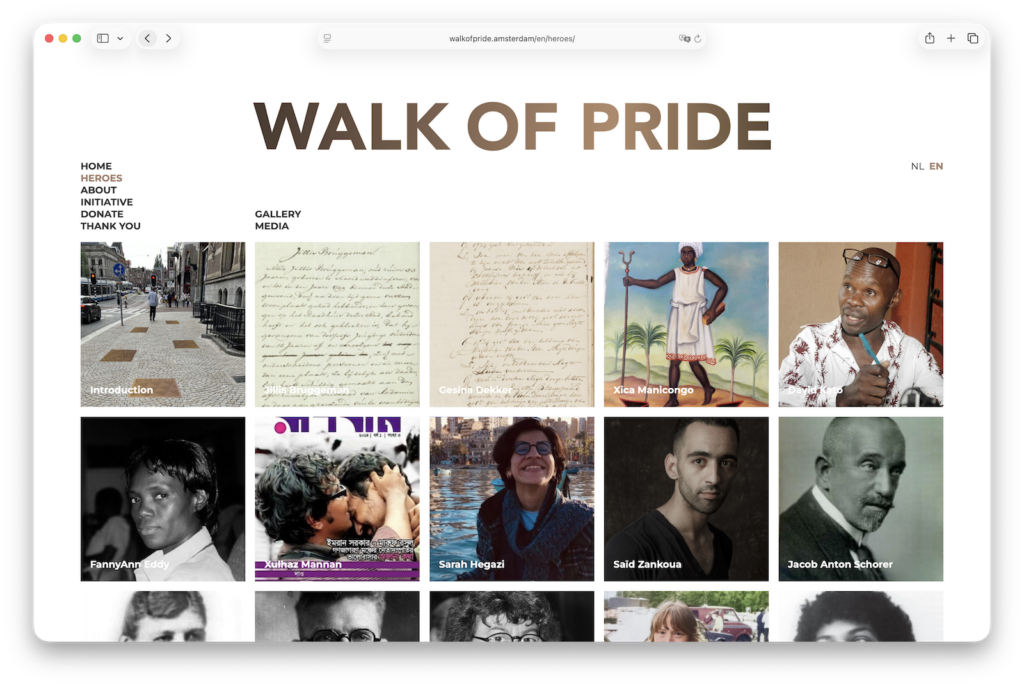
Client: GALA Foundation
Web design: gebr.silvestri
WordPress development: FourteenRockets
The Walk of Pride honours LGBTQ+ heroes in Amsterdam with a numbered tile for each, from Xica Manicongo to Marsha P. Johnson. Staff at IHLIA LGBTI Heritage had collected the material for all 54 heroes in shared folders, one per hero, with a biography, an introduction, years of birth and death, sources and image credits spread over Word documents, text files and photographs. From these folders, a new website had to be built in both Dutch and English, with every hero linked to their tile number.
No ready-made import tool could read folders like these and sort each piece of text into the right place. We therefore developed our own AI tools in-house, built for this project, and worked with Claude, Anthropic’s AI model, as a development partner throughout. Every decision and every release stayed with us.
Moving the content
Our import tool read each hero’s folder, recognised which file held the biography, the introduction or the years of birth and death, and suggested where each one belonged. We approved every suggestion before anything was saved, instead of copying 54 sets of texts by hand. Where a photograph had been supplied more than once, the tool kept the sharpest version.
Building the website
Visitors can explore the 54 heroes in three ways: a grid of portraits, a list in tile order, and a full page for each hero. When a hero’s tile number is set in Dutch, the English version receives the same number automatically, so the two languages always match.
Building the homepage
Visitors arrive on a full-screen photograph that glides into place when they click or scroll, after which the introduction video starts. The sequence works the same on computers and phones, in both languages.
The GALA Foundation now adds and edits heroes in WordPress, in Dutch and English, without our help.
Jump to project
dg-c.org
Our own AI tools mapped more than twenty years of work on the old website, and our AI image agent tagged each photograph by subject and colour.
Rhino Resource Center
Our own AI import tools moved more than 30 000 references with all their links intact, and AI analysis made searching the collection precise and fast.
Walk of Pride
Our AI import tool read 54 folders of mixed documents and photographs, recognised which text belonged where, and kept the sharpest version of each photograph.
FourteenRockets order system
Working with Claude, we built our own order system in eight weeks, and each order now reaches payment, billing, domain registration and accounting automatically.
Get in touch to find out how we can use AI for your project.